PIERRE, S.D. (Makenzie Huber / South Dakota Searchlight) – South Dakota’s workforce shortage and federal limitations on a $189.5 million infusion of cash are making some lawmakers worry about the feasibility and sustainability of the state’s plan to strengthen rural health care.
The funding comes from the $50 billion Rural Health Transformation Program. Congress included it in the One Big Beautiful Bill Act, in response to concerns that the bill’s Medicaid cuts will hurt rural health providers. Medicaid is a federal-state program that provides health insurance for people with disabilities or low incomes.
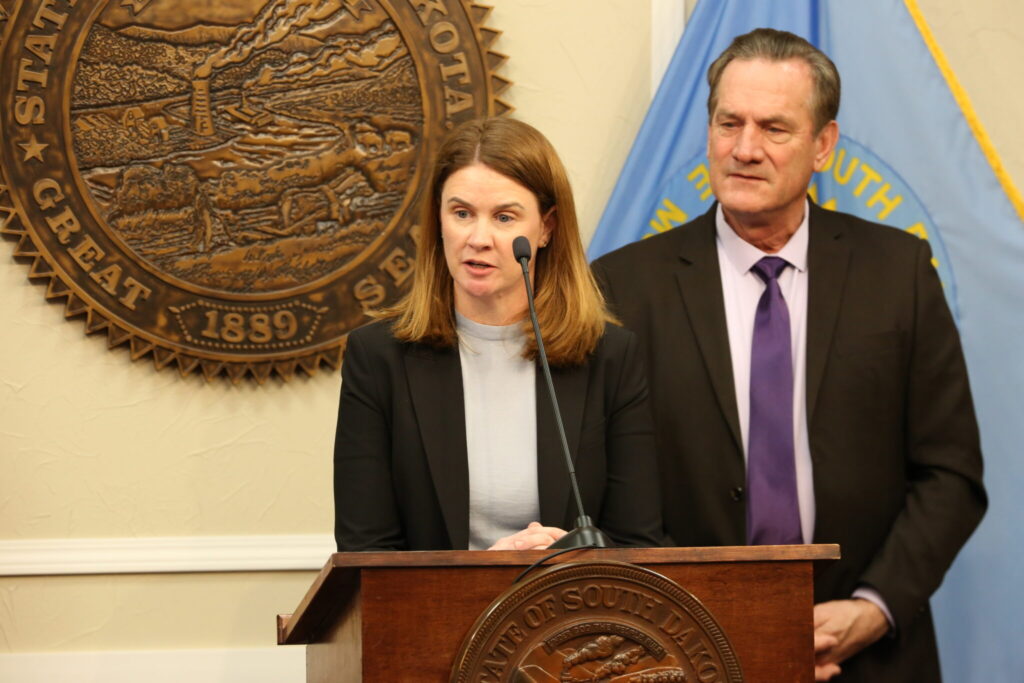
Lawmakers aren’t able to amend the state’s approved spending plan to address their own concerns, they learned in a presentation Thursday in Pierre. Laura Ringling, senior policy adviser for Gov. Larry Rhoden, told lawmakers the state can only make “some minor budget shifting” going forward.
The role lawmakers play is to authorize the state to spend the $189.5 million. Lawmakers on the House Appropriations Committee will be the first to consider a bill authorizing the funds.
Sen. Taffy Howard, R-Rapid City, has questions and frustrations about the funding. She told South Dakota Searchlight she intends to ask more questions of state officials during what will be “a long process.”
“It’s a matter of if this is something taxpayer dollars should be spent on,” Howard said. “If it’s not, then it’s our job to deny authority.”
The problem, Howard added, is that if the Legislature doesn’t spend the money, another state will spend it instead.
South Dakota’s plan outlines 10 initiatives, including creating a “data atlas” for providers and facilities to share local and state agency data, improving the rural health care workforce, improving chronic disease management, establishing regional maternal and infant health care hubs, and regionalizing behavioral health care, among other projects.
Ringling told lawmakers that one-time incentives will bolster the rural health care workforce so that it is sustainable and long-lived years after the one-time funding ends.
Incentives will include sign-on bonuses, relocation assistance and rural service stipends for health care professionals not already covered by the state’s rural assistance program, such as nurses, doctors and physician assistants. The federal government requires that people who are awarded workforce funding must commit to five years in the rural community.
“Nothing we do with these funds will matter if we don’t have the trained people in our communities to provide the care,” Ringling said.
Several lawmakers asked questions on Thursday about workforce needs and how those would be addressed outside of the incentives mentioned.
Howard told officials during the presentation that she’s skeptical about the proposal and its sustainability. The programs, especially the behavioral health and maternal and infant health care hubs, she said, could require more than one-time funding to operate in financially strapped rural communities.
Ringling said the programs, operated by non-state government organizations, must submit a sustainability plan to be considered for funding. Howard took that to mean taxes and fees could be raised at the local level.
“It doesn’t help the local citizens if the state says, ‘Well, the program is done. We wash our hands. We didn’t increase your taxes and fees,’ but then the sustainability model of the local entity increases our taxes and fees. They’re still feeling that pinch,” Howard said.
Rep. Erik Muckey, D-Sioux Falls, told South Dakota Searchlight that the presentation didn’t address the consequences of the One Big Beautiful Bill’s changes to Medicaid, including work requirements. Muckey called the one-time funding “a Band-Aid over a bullet wound.”
“There is excitement to be had about rural communities receiving the investments they deserve,” Muckey said. “But this still doesn’t answer the question about how to sustain quality health care going forward because of massive cuts to Medicaid.”
South Dakota’s award was short about $4 million of the $193.3 million it requested for the first year of the program, and it was less than the amounts received by neighboring states. The state does not know why it received less funding.
Ringling said the state requested nearly $213 million for the next year. She expects to receive that amount if “we’re doing what we said we were going to do.”
“If for some reason we’re delayed, we’re not able to get going, we’re not able to show that we’re performing and meeting the things that we said we would do in our application,” Ringling said, “we risk a lower dollar amount and losing those funds.”
Once the authorizing bill is signed, departments will begin finding organizations to carry out the initiatives in the state’s Rural Health Transformation Program application. The money must be spent by October.
South Dakota’s requests
South Dakota requested $1 billion over five years to implement its rural health transformation plan, with its request changing yearly.
Year 1: $193.3 million (actual award: $189.5 million)
Year 2: $212.3 million
Year 3: $213.7 million
Year 4: $202.6 million
Year 5 $178.1 million