SOUTH DAKOTA (South Dakota Searchlight) – It’s becoming more common for South Dakotans to kill themselves with a gun, according to new data.
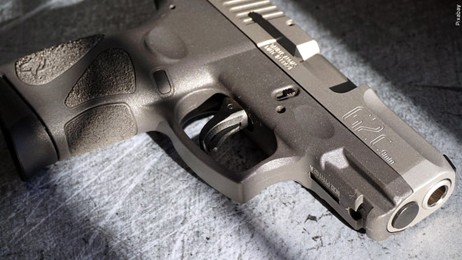
The number of South Dakotans who took their own lives with a firearm rose to 116 last year, and the proportion of South Dakota suicides involving a gun rose to 59%, according to the state Department of Health. The state’s gun-suicide rate rose to 12.6 per 100,000 people. All three numbers are the highest in recent years’ data for the state.
Suicide prevention workers say the numbers underscore the need for real-life connection and safe gun storage in a state where firearm ownership is common and legal gun restrictions are minimal.
Sioux Falls Police Chief John Thum cautioned against attributing the trends to a single cause, because local investigations encounter factors ranging from terminal illness to relationship struggles, chronic depression and substance use.
But access and lethality also matter.
“There’s a definite sense of finality to a gunshot attempt,” Thum said. “If we look at some of the other suicide attempts that we have — overdose, and some of the other ones — the level of absolutism to a firearm is there.”
Gun laws and lawmaking in Pierre
According to estimates by the RAND Corporation, a nonprofit policy think tank, more than half of adults in South Dakota live in a household with a firearm. A separate analysis by KFF, a nonprofit health policy research group, shows South Dakota has some of the loosest gun restrictions in the country, and “more than twice as many suicides by firearm occur in states with the fewest gun laws, relative to states with the most laws.”
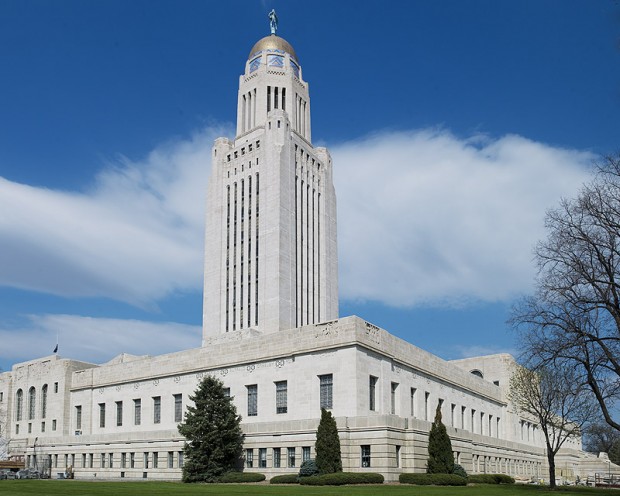
South Dakota requires no permit or background check for private gun sales, allows for the carrying of concealed pistols without a permit, allows concealed pistols in bars and on public college campuses, allows concealed pistols in the state Capitol with prior approval and notification, does not have a firearm registration system, and lacks a “red flag law,” which in other states allows temporary firearm removals from people in crisis.
Democratic former state lawmaker Linda Duba, of Sioux Falls, unsuccessfully proposed what she described as two “modest firearm safety bills” during the 2024 legislative session. She said one of her goals was to lower firearm suicides in the state.
One bill would have required gun owners to report lost or stolen firearms. The other would have required firearms not in use to be locked away with a gun lock or in a safe. Duba said she had seen research that locked-up firearms were less likely to be used in a suicide.
Duba said some Republican legislators privately supported the measures, but refused to back them publicly because they feared political retaliation from the National Rifle Association. She said the association makes it impossible to convince Republican legislators to support “even the most reasonable regulations.”
“It’s going to take someone being personally impacted before they wake up,” Duba said.
Rep. Tim Reisch, R-Howard, is a retired sheriff, former state Department of Corrections secretary and a member of the National Guard. He was one of a handful of Republican lawmakers earlier this year to vote against the legislation that now allows for the carrying of concealed pistols on technical college and public university campuses. He said many Republicans in Pierre fear negative campaign postcards from the National Rifle Association showing up in their constituents’ mailboxes.
“Nobody wants a ‘D,’ ‘C,’ or even a ‘B’ grade,” from the NRA, Reisch said. “These scorecards are ridiculous. It’s one person’s opinion. But in the end, come election season, sound bites matter. It’s ‘Reisch is soft on crime.’ And those things weigh heavily in the minds of some legislators who really want to keep getting elected.”
Former state trooper Rep. Jim Halverson, R-Winner, also voted against the bill allowing concealed pistols on campus.
“I’m a Second Amendment lover, I really am,” he said. “I just believe there are places where it’s not a good idea.”
Halverson said college is a place where students may experience their first big failure, first major breakup, and first experiences with drugs and alcohol. All of that, and being away from the support of family at home, makes for an environment where suicides could become more likely, he said.
Halverson said “unless these people have seen somebody who’s been shot themselves, seen someone who has taken their life, they don’t get it.”
“They haven’t had to go pick up a body,” he said. “Or go to somebody’s house and say, ‘Your son or daughter is not coming home tonight.’”
Retired law enforcement officer Rep. Kevin Van Diepen, R-Huron, voted in favor of the pistols-on-campus bill. He said it was a Second Amendment issue, and it would have been unconstitutional to restrict students’ rights.
Van Diepen said suicide “is a mental health issue.”
“If they didn’t have a gun, they would use some other means,” he said.
Storage, loneliness and stigma
Lost & Found is a Sioux Falls-based suicide prevention nonprofit. Researcher Cody Ingle said suicide is not always linked to mental illness. Sometimes it’s an impulsive decision brought on by stress or crisis. He said things like gun locks can be the difference between people pulling the trigger in the heat of the moment, and just a few more breaths that can save their life.
“We’ve had individuals come up to us and say, ‘This gun lock saved my life,’” Ingle said. “We’re not saying guns are bad, but creating time and space between someone in a difficult headspace and a firearm can save lives.”
Safe gun storage, according to the Bureau of Alcohol, Tobacco, Firearms and Explosives, includes locking up guns in a safe with a trigger lock and keeping ammunition separately stored. Keys and codes should be secured.
Loneliness and isolation — which the U.S. surgeon general declared a public health crisis in 2023 — is also playing a role in the gun suicide trend, said Carrie Jorgensen, executive director of Lost & Found.
“People are not connecting like they used to,” she said. “And in the online, virtual space, it’s not the same. You can still feel incredibly lonely, even if you have 10 conversations happening at the same time.”
She said stigma around mental health remains strong in South Dakota, where cultural norms can discourage seeking help, particularly among men.
“That idea of ‘pull yourself up by your bootstraps, just grin and bear it,’ continues to exist, especially within that population,” Jorgensen said.
The male suicide death rate in the U.S. is about four times higher than the female rate, and 57% of male suicides in South Dakota from 2015 to 2024 involved a firearm, according to the state Department of Health.
Jorgensen advised South Dakotans to take the time to maintain real-life friendships and a sense of community, and not to be too proud to ask for help from friends, family or suicide prevention and mental health professionals.