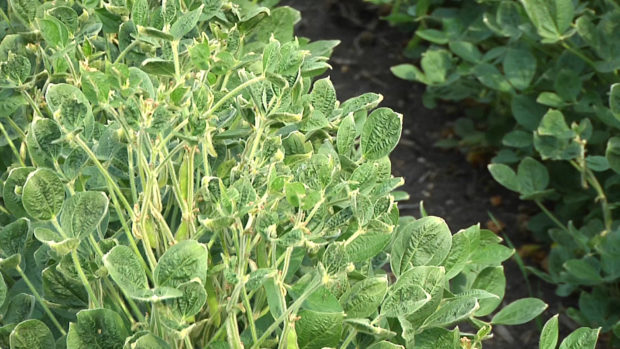
The jury is still out on whether farmers will see yield loss in soybeans that experienced leaf cupping damage due to dicamba. SDSU Extension Weed Specialist Paul Johnson says unfortunately about the only research done on yield impact was 40 years ago when dicamba was used on corn.
Johnson says it was not one, but a combination of factors that lead to the dicamba damage. They include application error, off-target drift and volatilization from spraying late in the season after rains regenerated weed problems.
He says with the problems that have arisen this year he anticipates labeling changes for the 2018 crop season.
Farmers are encouraged to report dicamba damage and resulting yields they record at harvest to the South Dakota Department of Agriculture or company officials.